
Hotel RFP Process: Does Workforce Travel Still Need It?
Traditional RFPs work best when travel demand is stable, predictable, and planned well in advance. However, workforce lodging requires a level of flexibility that can accommodate changing project timelines, shifting crew locations, and unexpected operational needs.
For years, the hotel RFP process has been a standard approach for corporate travel procurement. It provides structure, consistency, and cost control—especially in environments where travel patterns are stable and demand can be accurately forecasted.
A crew assigned to a six-week project near Misawa may be redirected to another site after only two weeks. A project expected to begin in spring may not start until months later. These changes make it difficult to rely on forecasts created a year in advance.
As a result, more procurement teams managing off-base housing and crew lodging are reevaluating their approach and asking an important question: does a traditional hotel RFP process still support the realities of workforce travel, or is it creating unnecessary complexity when flexibility is needed most?
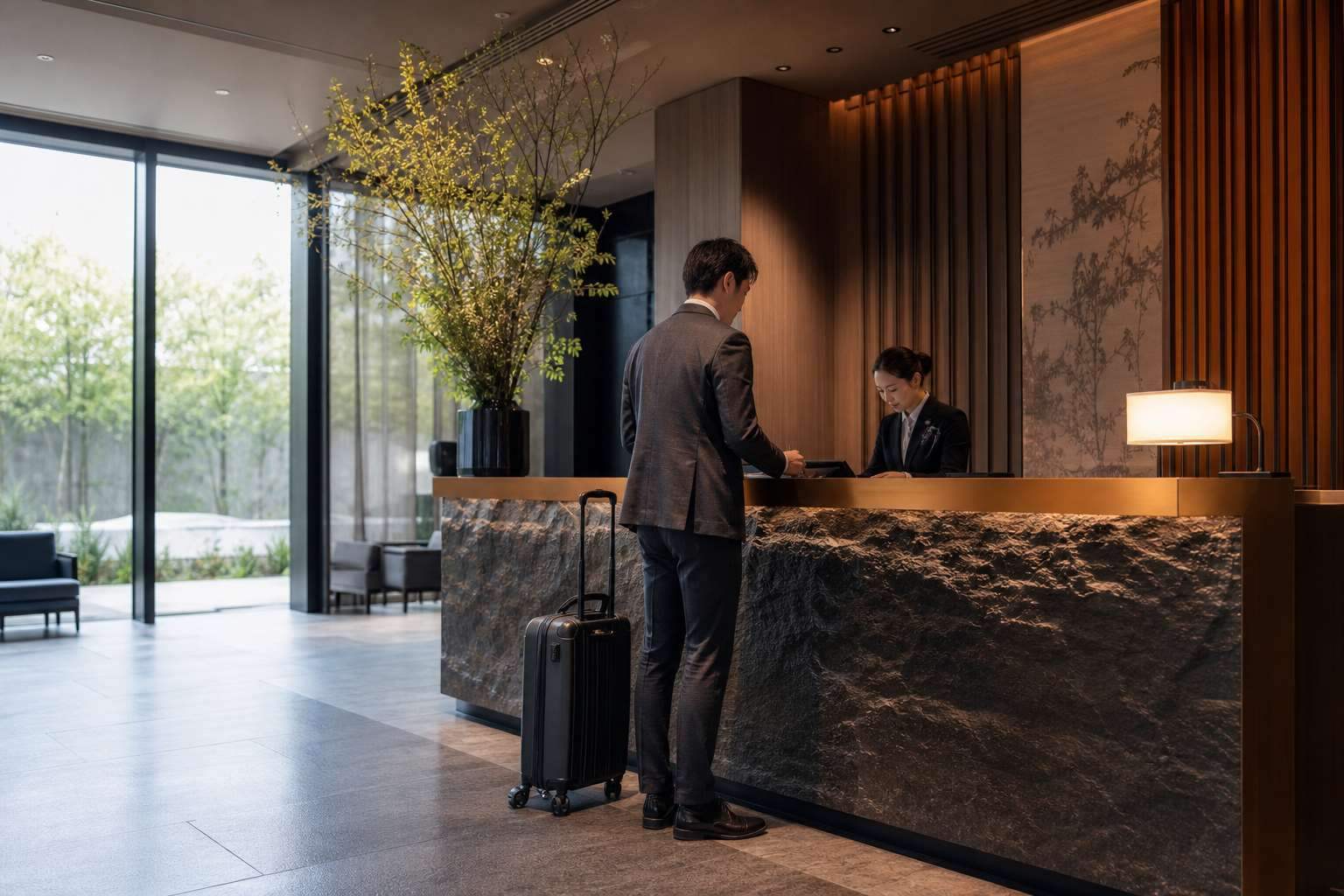
What is a hotel RFP process?
A hotel RFP process (request for proposal) is the structured way organizations negotiate hotel rates and availability in advance.
In most cases, it looks something like this, and it typically takes anywhere from six weeks to a few months start to finish:
-
Teams gather historical travel data and forecast demand for the year
-
A hotel RFP template is sent out to hotels or chains
-
Properties respond with rates, terms, and availability
-
Procurement negotiates and awards preferred suppliers
-
Rates are loaded into a booking system or travel program
In traditional corporate travel, this works well because it creates predictability. You lock in pricing, standardize suppliers, and reduce last-minute booking costs.
The challenge is that it assumes demand behaves in a fairly stable way. And workforce travel—especially for crews supporting construction and base-adjacent projects in Japan—rarely does.
Why RFPs work well for traditional corporate travel
In a typical office-based travel program, the hotel RFP process still has real value. Travel patterns are relatively consistent. Employees often visit the same cities. Volumes are easier to forecast.
That makes it possible to:
-
Secure negotiated rates in advance
-
Build reliable annual forecasts
-
Consolidate hotel suppliers
-
Reduce volatility in pricing
When travel is stable, RFPs provide structure and cost control. But workforce travel for crews operating near job sites and bases across Japan operates in a very different environment.
Looking for furnished housing near Japan bases and project sites?
Search Furnished HousingWhere the RFP process starts to break down for crew travel
In construction, energy, utilities, and transportation, travel is tied directly to operations—and operations rarely stay still.
A project might ramp up unexpectedly. Weather can disrupt access. Or a crew size can double with very little notice.
That creates a travel environment that is:
-
Project-based rather than calendar-based
-
Highly variable in volume and duration
-
Dependent on remote or secondary markets near job sites
-
Sensitive to last-minute operational changes
In that context, a once-a-year hotel RFP process—negotiated months before anyone knows exactly where or when crews will be in Okinawa, Yokota, Sasebo, or Misawa—can start to feel disconnected from reality.
Rates negotiated in Q1 don't always reflect actual availability when crews show up in Q3. Preferred properties may simply not have capacity when demand spikes in a specific region.
So instead of reducing complexity, the process can sit alongside it without really solving it.
The hidden costs of managing hotel RFPs
On paper, RFPs are about savings and control. In practice, they come with operational overhead: collecting data, building forecasts, managing supplier outreach, reviewing bids, and handling negotiations—often while projects are already moving.
Once contracts are signed, it becomes harder to adjust when project locations change or crew volumes shift. You may have negotiated strong rates in one market, but the work ends up happening somewhere completely different.
Unused agreements are also common when operational reality changes after the RFP cycle wraps up. Reconciling contracted rates with actual bookings and managing exceptions can become an ongoing workload rather than a one-time exercise.
Ready to simplify crew lodging across Japan?
Contact Offbase Housing JapanDynamic sourcing
Make lodging decisions closer to the time of need—based on live availability, proximity to the job site, and project timing across Japan destinations.
Broader supply access
Pull from furnished housing, extended-stay options, and regional inventory near bases—not only a fixed list of contracted hotels.
Centralized support
Replace scattered spreadsheets and phone calls with clear booking support so teams can track lodging demand, spend, and availability by project.
When an RFP still makes sense
This doesn't mean the hotel RFP process is going away. If you have long-term projects in fixed locations, predictable demand, or high-volume travel concentrated in specific cities, RFPs can still provide meaningful value.
The key is figuring out where predictability actually exists in your Japan operations. Some parts of the business have it. Others don't—and pretending otherwise is where the friction creeps in.
Offbase Housing Japan helps procurement and operations teams blend structure with flexibility: destination-ready furnished housing near bases and project sites, with support for extended stays and crew rotations.
FAQs: Hotel RFPs in workforce travel
Do we still need a hotel RFP process for workforce travel? +
In stable, predictable markets, yes. But if your crews are moving between changing job sites across Japan, check whether the process has become more about admin than actual savings.
Why do RFPs feel harder to use for crew travel? +
Crew travel doesn't behave like office travel. Sites shift, timelines change, and demand rarely holds steady long enough to plan a full year out accurately.
Is the problem the RFP itself, or how it's being used? +
A bit of both. RFPs still work well in stable-demand situations. They just weren't designed with fast-changing, project-based travel in mind.
What happens when RFPs don't match actual travel needs? +
Usually unused contracts, last-minute bookings outside negotiated rates, and manual work reconciling the gap between the two.
What are teams doing instead? +
Many teams blend approaches: keep an RFP for stable hubs, while using flexible, destination-based furnished housing support for active project work near Japan bases.
Is moving away from RFPs risky? +
Not inherently. The real risk is rigidity. The goal stays the same: cost control and visibility, with tools that match how crews actually move.
Related Articles

Essential KPIs for Crew Travel Management
Jun 29, 2026
Track the workforce travel KPIs that reduce costs, improve visibility, and support better crew lodging decisions across Japan.

Workforce Travel Software vs OTAs: Which Is Better?
Jun 24, 2026
OTAs work well for simple bookings, but workforce travel is rarely simple. Learn when dedicated crew lodging support delivers better results...
Standardizing Lodging for Construction Projects
Jun 23, 2026
Discover how to streamline crew lodging across Japan's construction projects with a repeatable process that reduces costs and improves visib...

Crew Travel Safety: An Emergency Planning Checklist
Jun 22, 2026
Build a stronger crew travel preparedness plan to manage lodging changes and minimize project delays across Japan.